
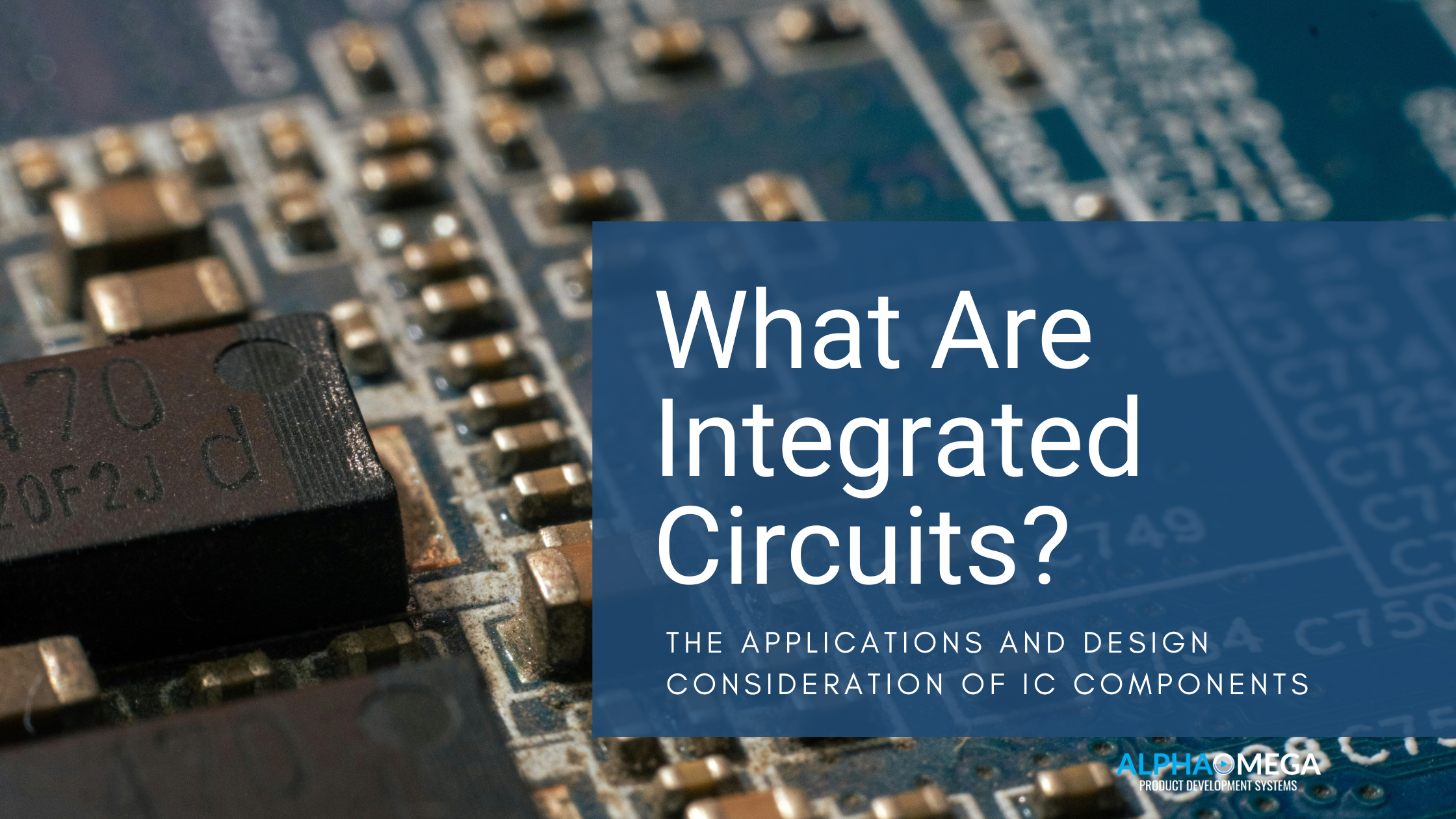
Integrated Circuits Explained: Design, Types, Applications, and Modern Challenges
Integrated circuits (ICs) form the foundation of modern electronics. From smartphones and laptops to automotive systems and AI accelerators, ICs enable compact, high-performance, and energy-efficient functionality at scale. As systems demand higher speeds, lower power consumption, and tighter integration, IC design has evolved into a multidisciplinary engineering domain that blends semiconductor physics, circuit theory, and electromagnetic analysis.
This guide explains what integrated circuits are, how they are designed, the various types of ICs, and their applications. It also explores emerging challenges in IC development and how simulation tools, such as Ansys HFSS, support high-frequency and advanced packaging design.
What Is an Integrated Circuit?
An integrated circuit is a semiconductor device that combines multiple electronic components, such as transistors, resistors, and capacitors, onto a single piece of material, typically silicon. Engineers fabricate these components using photolithography and doping processes, creating densely packed circuits that perform specific electrical functions.
Instead of assembling discrete components on a board, ICs integrate thousands to billions of transistors into a compact chip. This integration enhances performance, reduces size, lowers costs, and improves reliability by minimizing interconnect length and parasitic effects.
How Integrated Circuits Work
ICs operate by controlling the flow of electrical signals through semiconductor structures. Transistors act as switches or amplifiers, enabling logic operations, signal processing, and power regulation. As operating frequencies increase, electromagnetic effects such as coupling, delay, and signal integrity degradation become critical design considerations.
At a fundamental level, IC behavior depends on:
- Semiconductor physics: Engineers manipulate charge carriers (electrons and holes) within silicon to control conductivity.
- Circuit topology: Designers arrange transistors into functional blocks such as logic gates, amplifiers, or memory cells.
- Interconnect networks: Metal layers route signals and power across the chip, introducing parasitic resistance and capacitance.
- Timing and synchronization: Clock signals coordinate operations in digital ICs, ensuring the correct sequencing of logic states.
Types of Integrated Circuits
Integrated circuits are categorized based on functionality and signal type. Each type serves distinct roles within electronic systems.
Analog Integrated Circuits
Analog ICs process continuous signals such as voltage and current. Engineers use them for amplification, filtering, and signal conditioning in audio systems and sensor interface applications.
Digital Integrated Circuits
Digital ICs operate on discrete logic levels (0 and 1). These chips include microprocessors, memory devices, and logic controllers that execute computations and data processing tasks.
Mixed-Signal Integrated Circuits
Mixed-signal ICs combine analog and digital functionality on a single chip. Designers use them in applications such as data converters (ADCs/DACs), RF transceivers, and communication systems.
RF and Microwave Integrated Circuits
RF ICs operate at high frequencies, often in the gigahertz range. Engineers design them for wireless communication, radar systems, and high-speed connectivity. These designs require careful electromagnetic modeling due to wavelength-scale effects.
Power Integrated Circuits
Power ICs manage voltage regulation, energy conversion, and power distribution. They are critical in battery-powered devices, automotive systems, and industrial electronics.
Integrated Circuit Design Process
Designing an IC requires a structured workflow that spans concept development through fabrication and validation. Each stage introduces constraints that influence performance, cost, and manufacturability.
1. Specification and Architecture
Engineers define performance targets like speed, power consumption, area, and functionality. Architectural decisions determine how the system partitions into functional blocks.
2. Circuit Design and Schematic Development
Designers create transistor-level schematics that implement the required functionality. This stage includes selecting device sizes, biasing conditions, and circuit topologies.
3. Layout Design
Layout engineers translate schematics into physical geometries. They define transistor placement, routing, and layer stacking while adhering to manufacturing design rules.
4. Verification and Simulation
Simulation ensures the design meets specifications before fabrication.
- Electrical simulation: Validates circuit behavior under various operating conditions.
- Timing analysis: Ensures signals propagate within required timing constraints.
- Parasitic extraction: Models resistance, capacitance, and inductance introduced by interconnects.
- Electromagnetic simulation: Evaluates high-frequency effects, coupling, and signal integrity using tools like HFSS.
5. Fabrication
Manufacturers produce ICs using semiconductor fabrication processes, including photolithography, etching, and deposition. Advanced nodes use nanometer-scale features to increase transistor density.
6. Testing and Validation
Post-fabrication testing verifies functionality, performance, and reliability. Engineers identify defects, validate yield, and ensure compliance with design specifications.
Key Challenges in Modern IC Design
As IC complexity increases, engineers must address several technical challenges that impact performance and manufacturability.
Signal Integrity and Electromagnetic Effects
High-speed signals experience reflections, crosstalk, and delay due to parasitic effects. Engineers must model interconnect behavior accurately to maintain signal quality.
Power Density and Thermal Management
Increased transistor density raises power consumption and heat generation. Thermal effects can degrade performance and reliability if not properly managed.
Scaling Limitations
As process nodes shrink, variability and quantum effects become more pronounced. Designers must account for manufacturing variability and leakage currents.
Advanced Packaging and Chiplet Integration
Modern systems use chiplets and advanced packaging to combine multiple dies. These architectures introduce complex interconnect and electromagnetic challenges that require system-level simulation.
Applications of Integrated Circuits
Integrated circuits enable functionality across virtually every industry. Their versatility stems from their ability to integrate complex systems into compact, efficient devices.
Consumer Electronics
ICs power smartphones, laptops, wearables, and smart home devices by enabling processing, connectivity, and power management.
Automotive Systems
Modern vehicles rely on ICs for engine control, infotainment, advanced driver-assistance systems (ADAS), and sensor integration.
Telecommunications
RF and digital ICs enable wireless communication, including 5G networks, Wi-Fi, and satellite systems.
Industrial Automation
ICs support control systems, robotics, and monitoring equipment in manufacturing environments.
Aerospace and Defense
High-reliability ICs operate in extreme environments for navigation, communication, and radar systems.
Role of Electromagnetic Simulation in IC Development
As frequencies increase and packaging becomes more complex, electromagnetic behavior plays a critical role in IC performance. Engineers must analyze coupling, radiation, and signal integrity at both chip and system levels.
High-Frequency Interconnect Modeling
Simulation tools evaluate transmission lines, vias, and interconnect structures to ensure impedance matching and minimize losses.
RF and Antenna Integration
RF ICs often integrate antennas or operate in close proximity to them. Simulation predicts radiation patterns and coupling effects.
Package and System-Level Analysis
Advanced packaging introduces interactions between dies, substrates, and enclosures. Engineers use 3D electromagnetic simulation to model these effects accurately. By integrating electromagnetic simulation into the design workflow, engineers reduce risk, improve performance, and minimize costly design iterations.
Future Trends in Integrated Circuits
The evolution of IC technology continues to push the boundaries of performance and integration. These trends demand advanced simulation, optimization, and design methodologies.
- Chiplet architectures: Modular designs enable flexible scaling and improved yield.
- AI and machine learning acceleration: Specialized ICs optimize performance for data-intensive workloads.
- Heterogeneous integration: Combines multiple technologies within a single package.
- Higher frequency operation: Enables faster data transfer but increases design complexity.
Integrated circuits remain the backbone of modern electronics, enabling everything from consumer devices to advanced communication systems. As design complexity increases, engineers must address challenges related to signal integrity, power management, and system integration.
Simulation-driven design plays a critical role in overcoming these challenges. Tools like Ansys HFSS provide the electromagnetic insight required to validate high-frequency and advanced packaging designs before fabrication. Engineers developing next-generation ICs benefit from integrating simulation early in the design process, reducing risk and accelerating innovation.